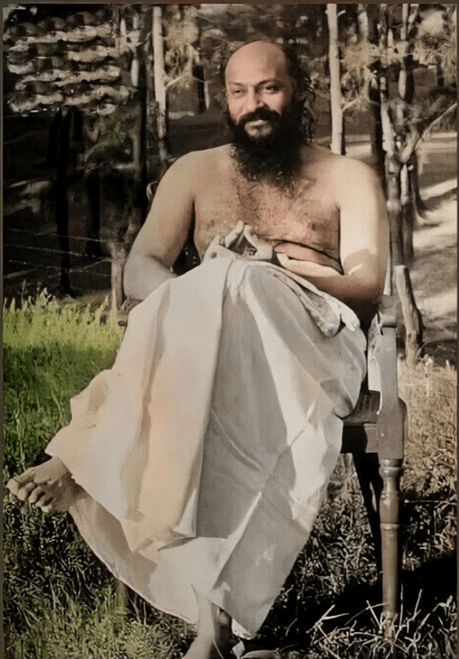
When Osho left his physical body on January 19, 1990, having lived for 58 years, 1 month, and 8 days, many might have thought this marked the end of a spiritual leader known for his playful nature. Some believed his books would gradually fade away, his audio sermons would go silent, and his video recordings would gather dust, forgotten by all.
In the years that followed, divisions arose among the disciples managing Osho’s meditation community at the Pune Ashram. Much like the story of NanakDev, Osho‘s disciples spread across the globe.
However, nothing Osho said has vanished from the annals of time. His influence has broadened awareness among people worldwide. Without his teachings, the words and deeds of saints from the Nirguna Bhakti tradition, such as Dadu, Paltu, and Sahajo, would not be known, even within India.
Many non-Jain followers may remain unaware of Mahavir‘s profound insights, and the works of Gurdjieff and his disciple P.D. Ouspensky would likely have remained obscure to Indians without Osho’s impact. Texts like “In Search of the Miraculous” and “Tertium Organum” might have seemed almost inaccessible.
Had Osho not spoken publicly about Meher Baba, he would likely have remained known only to his followers. One can only speculate how many would have discovered the book “I Am That” if Osho hadn’t extensively discussed Nisargadatta Maharaj.
Osho’s frequent references to Jiddu Krishnamurti in his discourses helped elevate Krishnamurti‘s ideas beyond an elite niche, granting him broader exposure. Osho facilitated a deeper understanding of the knowledge he shared, connecting diverse teachings.
Without Osho‘s voice, the words of Nanak would likely have remained confined to the Sikh community, limiting the audience who might explore insightful texts like “Ek Omkar Satnaam,” “Nanak Dukhiya Sab Sansar,” and “Nanak Sansari Sanyasi,” which offer a glimpse into Nanak‘s world.
Moreover, had Osho not spoken about Jesus, many non-Christians would not have learned as much about him; nor would non-Jews have gained insight into the life of Moses, or non-Muslims learned about the virtues of Prophet Muhammad. We might not have been introduced to the world of Saint Rabia.
Thanks to Osho‘s in-depth discourses on the SrimadBhagwadGita, perspectives on the text have evolved significantly through his work “Gita Darshan.” He revealed the richness of Ashtavakra and provided accessible interpretations of the Mahagita.
If Osho had not shared his insights on Kabir, this mystical figure would have been reduced to mere couplets in Hindi classrooms, limited by the educational approaches of the time.
Osho revived and presented many timeless ideas from the past in a modern context.
Osho‘s discourses are among the most plagiarized in the world. If such an event had occurred during his lifetime, he would have laughed at the absurdity, prompting laughter from his audience.
Not long ago, an Indian guru used a mantra composed of absurd words originally coined by Osho—unique phrases that had never been uttered by anyone else. This guru likely discovered them only after mimicking Osho, unaware of the unique meanings behind the phrases.
People of all faiths around the world draw from Osho‘s teachings.
Osho‘s diverse world of humor has even led to the creation of a unique method called humor meditation.
He stands out as a figure who connected different cultures through his discourses, building bridges and fostering mutual understanding about what is good.
No other figure in history has offered women the same opportunities for growth that Osho did within his community.
Had Osho never been born or shared his insights, the world would have been deprived of many wonderful perspectives and teachings.
His playful spirit continues to resonate and expand across the globe. The journey goes on.
…[Rakesh]
Discover more from Cine Manthan
Subscribe to get the latest posts sent to your email.
 Cine Manthan


 Cine Manthan
Leave a comment